
Our catalog, arranged by botanical names, contains descriptions and cultural information about each of the 2000+ varieties that we grow. This information is based on our experience in growing these plants (in Zone 7), as well as the experiences of our customers. Sandy personally trials many of our selections in her display gardens. When we add a new variety, we provide the best information that we can find on that plant at the time. In addition to individual entries we also provide quick reference lists of plants for particular conditions or purposes, such as clay soil, long bloomtime, groundcovers, coastal sites, deer resistance, etc. Because we grow a large number of Hostas and daylilies we have quick reference charts to help you choose the size, color or other characteristics of these plants. You can access these lists and charts by clicking on the Plant Solutions tab above.
We also produce a yearly print catalog that is available by mail. (If you are a current wholesale customer, you will automatically receive one when they are published.) Although the print catalog does not contain photos, it is a valuable reference for anyone growing perennial plants in this area. The catalog is $4.00 if purchased at the nursery. We will be happy to mail a copy for $6.00 (includes postage), select Contact Us.
The catalog below will allow you to create a Shopping List of the plants you are interested in purchasing. You will be able to print this list to take with you to your local garden center or to our nursery.
|
|
Common Name: Sneezeweed
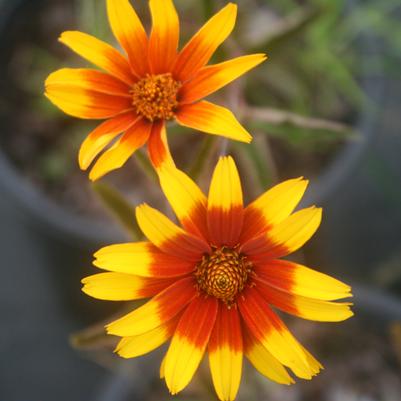
An unusual form - round heads of yellow, rust and red have a small yellow fringe at their base. Really cute in a bouquet. Prefers rich, moist, organic soils.
[ More Information ]
|
|
Common Name: Sneezeweed
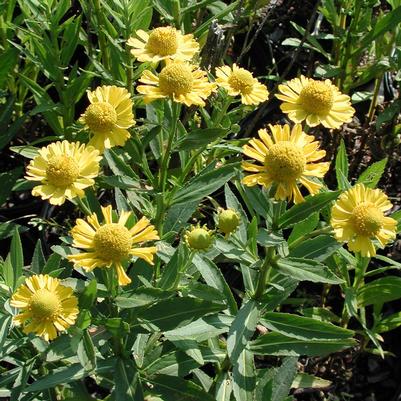
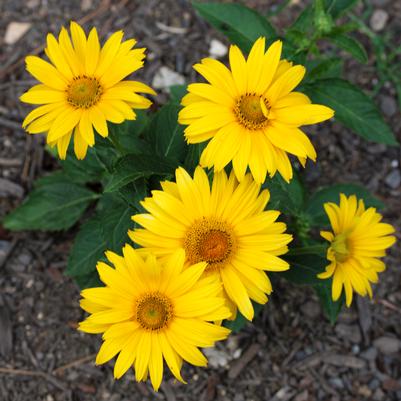
Bright canary yellow flowers that are absolutely fantastic as a cut flower, often lasting 10 or more days in a vase. Native plant that is found in moist fields. Attractive to butterflies. Deer resistant. Long blooming.
[ More Information ]
|
|
Common Name: Sneezeweed
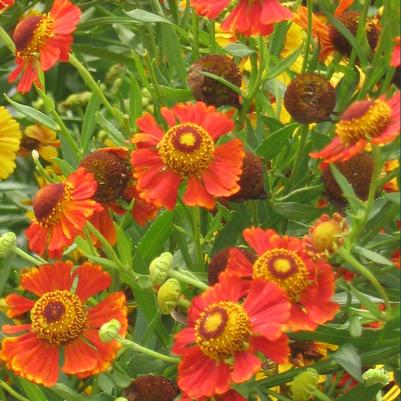
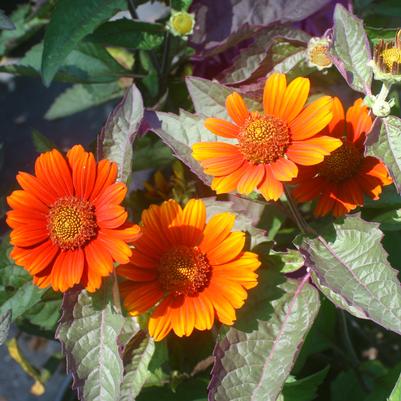
A mix of crested, deep red to orange daisy-like flowers with golden-yellow picotee edges. Native that is well suited to the heat and humidity of Richmond. Absolutely fantastic as a cut flower, often lasting 10 or more days in a vase.
[ More Information ]
|
|
Common Name: Sneezeweed
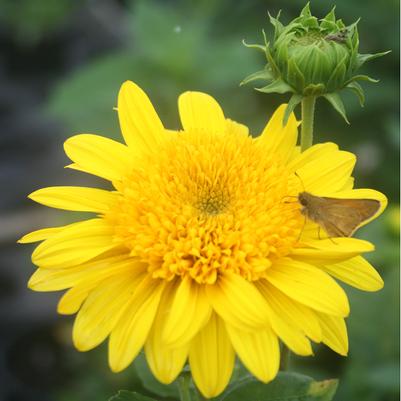
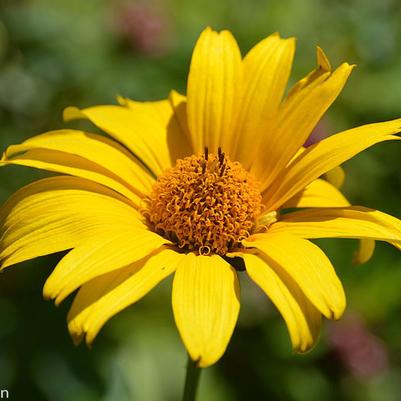
Crested golden-yellow daisy-like flowers in fall. Native that is well suited to the heat & humidity of Richmond. Absolutely fantastic as a cut flower, often lasting 10 or more days in a vase. Attractive to butterflies. Deer resistant. Long blooming.
[ More Information ]
|
|
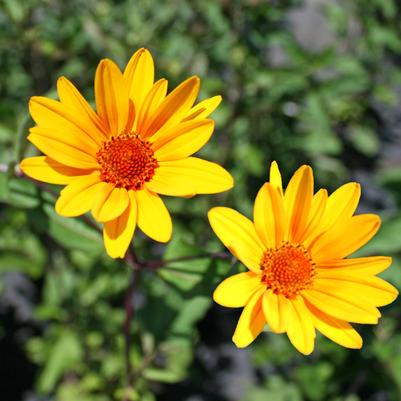
Common Name: Sneezeweed
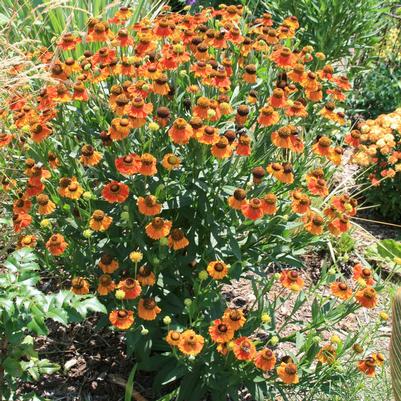
Multi-toned yellow petals splashed with orange-red surround deep brown cones. Creates a big splash in the garden through much of the summer. A Blooms of Bressingham introduction.
[ More Information ]
|
|
Common Name: Sun Rose
Soft pink double flowers with soft, silky petals over nice gray foliage. Long blooming and tolerant of coastal conditions. Grow in poor, rocky, or sandy soil that is well-drained, especially in winter. Drought tolerant.
[ More Information ]
|
|
Common Name: Sun Rose
Bright orange flowers with maroon centers and soft, silky petals over green foliage. Long blooming and tolerant of coastal conditions. Grow in poor, rocky, or sandy soil that is well-drained, especially in winter. Drought tolerant.
[ More Information ]
|
|
|
Common Name: Rock rose
Saucer-shaped, ruby red blooms have golden yellow centers. Plants form vigorous, ground-hugging clumps of shiny, narrow green leaves. Long-blooming, drought tolerant and disease resistant.
[ More Information ]
|
|
Common Name: Sun Rose
Double apricot flowers over mounds of glossy green foliage. Mounding to trailing habit. Long blooming and tolerant of coastal conditions. Grow in poor, rocky, or sandy soil that is well-drained, especially in winter. Drought tolerant.
[ More Information ]
|
|
|
Common Name: Sun Rose
Fresh soft pink flowers with silky petals are borne over frosty gray foliage. Excellent habit. Long blooming and tolerant of coastal conditions. Grow in poor, rocky, or sandy soil that is well-drained, especially in winter. Drought tolerant.
[ More Information ]
|
|
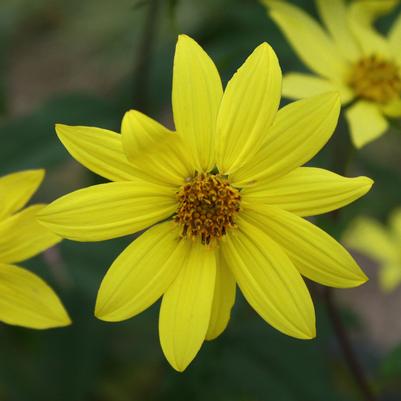
Common Name: Sunflower
This plant becomes a striking bold fountain of golden daisy-like flowers 3" flowers. Narrow foliage has texture and shine. Drought tolerant once established. Attractive to butterflies. Excellent cut flower. Long blooming. Native.
[ More Information ]
|
|
Common Name: Sunflower
Sprays of intense light yellow, single 2"'-3" flowers are irresistable to butterflies. A natural cross with a free flowering habit. Drought tolerant once established. Attractive to butterflies. Excellent cut flower. Long bloom [ More Information ]
|
|
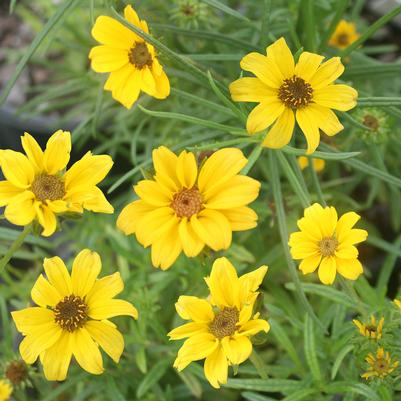
Common Name: Woodland Sunflower
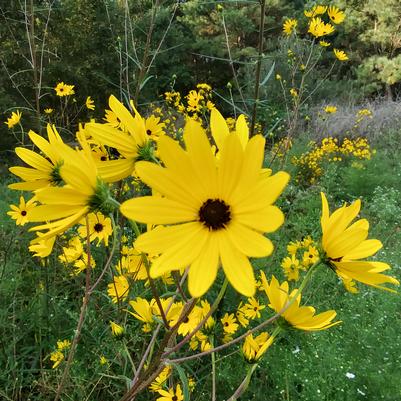
Exciting and distinctive fine textured sunflower with small clear yellow flowers. Drought tolerant once established. Attractive to butterflies. Excellent cut flower. Long blooming. Native. Great companion with grasses, Hemerocallis, or Agastache.
[ More Information ]
|
|
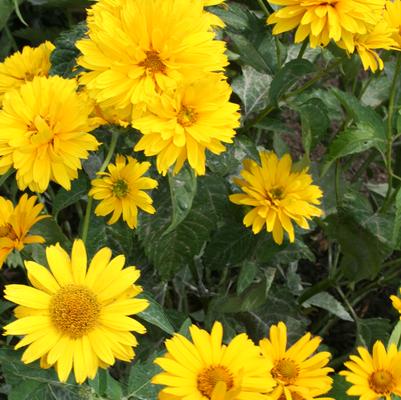
Common Name: Sunflower
Countless 2 1/2" golden-yellow double sunflowers cover crisp, dark green leaves. Stunning! Use as a specimen or in groups. Drought tolerant once established. Attractive to butterflies. Excellent cut flower. Long blooming. Native.
[ More Information ]
|
|
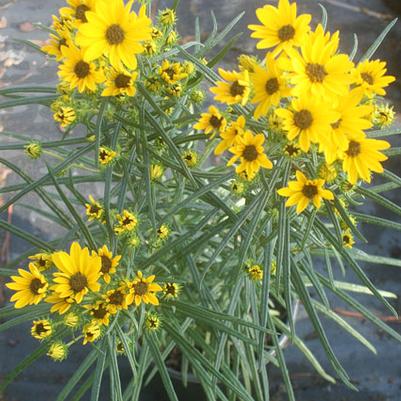
Common Name: Sunflower
Showy yellow daisy flowers. Extremely floriferous. Interesting dark green needle-like foliage. Drought tolerant once established. Attractive to butterflies. Excellent cut flower. Long blooming. Native. Plant Patented.
[ More Information ]
|
|
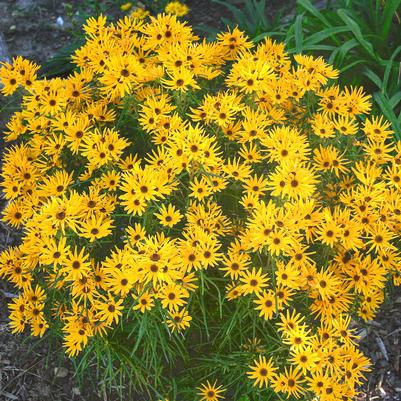
Common Name: Sunflower
Excellent dwarf form that is extremely floriferous. Drought tolerant once established. Attractive to butterflies. Excellent cut flower. Long blooming. Native. Blooms of Bressingham Introduction. Plant Patented.
[ More Information ]
|
|
Common Name: Sunflower
Bright sunny golden blooms in late summer appear at the top of this dwarf sunflower. Very hardy. Spread 16-20. Plant patented.
[ More Information ]
|
|
Common Name: Blue Oat Grass
Blue clumping grass with wider blades than the species. Resents wet feet. Selected to better withstand hot and muggy climates. White to tan 36" flower panicles in early summer. Bloom may be reduced during hot, humid conditions. Deer resistant.
[ More Information ]
|
|
Common Name: False Sunflower
Unique plants sport bright yellow blooms from July until frost above attractive white foliage highlighted by green. A Blooms of Bressingham introduction. Plant patented. Zones 3-9.
[ More Information ]
|
|
Common Name: False Sunflower
A profusion of large, double golden-yellow flowers are borne over an extended period of time. Exceptional variety that stands out in the garden. Attracts butterflies. Deer and vole resistant. Blooms of Bressingham Introduction. Plant Patented.
[ More Information ]
|
|
Common Name: False Sunflower
Golden-yellow blooms with attractive orange-red centers. In spring, the plants sport red stems and purple tinged foliage. Distinct! Attracts butterflies. Deer and vole resistant. Long blooming if deadheaded regularly.
[ More Information ]
|
|
Common Name: False Sunflower
Large bright yellow, single daisy-like flowers on long stems over glossy, serrated foliage. Attracts butterflies. Deer and vole resistant. Long blooming if deadheaded regularly.
[ More Information ]
|
|
Common Name: Creeping Heliotrope
Clusters of delicate lavender-blue blooms appear on low spreading well-branched, vigorous plants. A great groundcover. The species has naturalized in the southeast and gulf coast. It is both heat and humidity tolerant.
[ More Information ]
|
|
|
Common Name: Helleborus
A spring blooming, double white form that is 80% 1. Another wonderful addition to the world of hellebores.
[ More Information ]
|
|
|
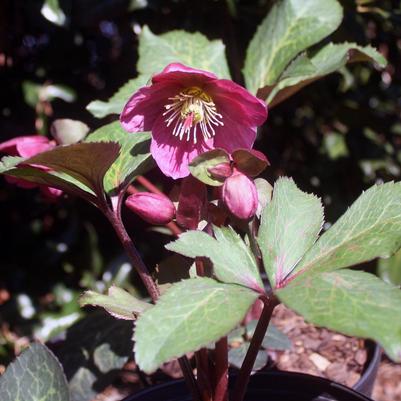
Common Name: Hellebore
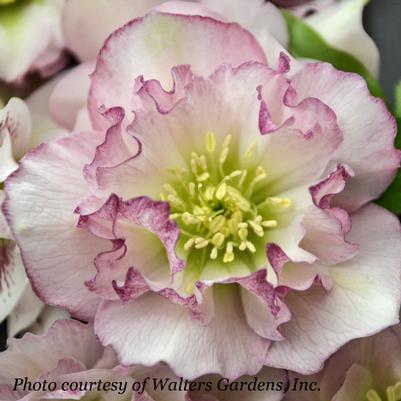
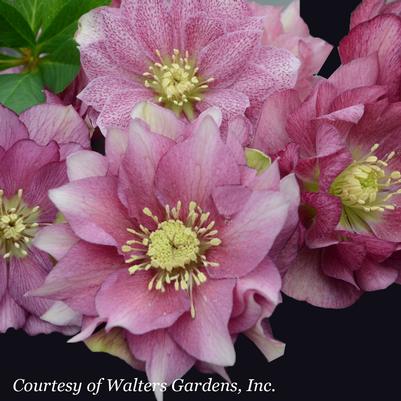
A selection bred for its all double flowers in a wonderful mix of white, pink, cream, deep red and green, many with spotted throats. Cut back old leaves in winter if they look shabby.
[ More Information ]
|
|
Common Name: Lenten Rose
Lovely ivory flowers are flushed with pink and streaked with green and rose hues that deepen with time. Gray-green foliage with attractive silver marbling. Cut back old leaves in winter if they look shabby. Deer resistant. Plant Patented.
[ More Information ]
|
|
Common Name: Lenten Rose
Large, fully double, pure white blooms appear in early spring on vigorous evergreen plants. Trim back old foliage in early spring for best appearance. Prefers light shade and humus-rich soil. Drought tolerant.
[ More Information ]
|
|
Common Name: Lenten Rose
A fabulous blend of hellebores whose blooms may be single, semi-double, or double. A wonderful assortment of colors range from dark slaty purple-blue to pure white picotees, yellows, and everything in between. Deer resistant.
[ More Information ]
|
|
Common Name: Lenten Rose
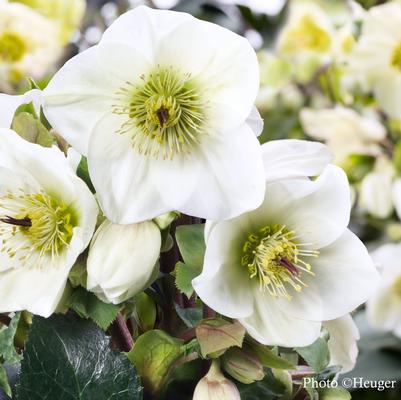
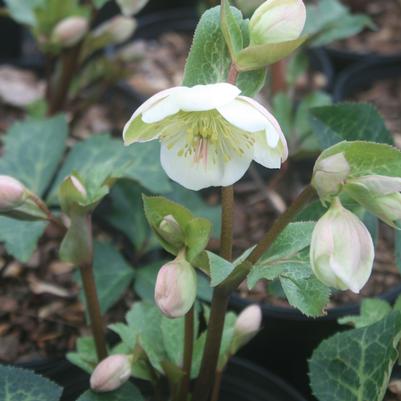
Clear white blooms with a green tinted center. The 'Lady' series offers vigorous upright plants with large flowers in single colors. Cut back old leaves in winter if they look shabby. Drought tolerant.
[ More Information ]
|
|
Common Name: Stinking Hellebore
Attractive multi-fingered, dark green foliage. Clusters of chartreuse bell-like flowers rimmed with maroon. Cut back old leaves in winter if they look shabby. Drought tolerant. Self sows where happy. Deer resistant.
[ More Information ]
|
|
Common Name: Lenten Rose
Bell-shaped flowers appear above clumps of handsome leathery leaves. Bloom colors include green, cream, pink or dark maroon. Cut back old leaves in winter if they look shabby. Drought tolerant. Self sows where happy. Deer resistant.
[ More Information ]
|
|
|
Common Name: Lenten Rose
Dark blue-red 2 1/2" flowers. The 'Lady' series offers vigorous upright plants with large flowers and very good color consistency. Cut back old leaves in winter if they look shabby. Drought tolerant. Self sows where happy. Deer resistant.
[ More Information ]
|
|
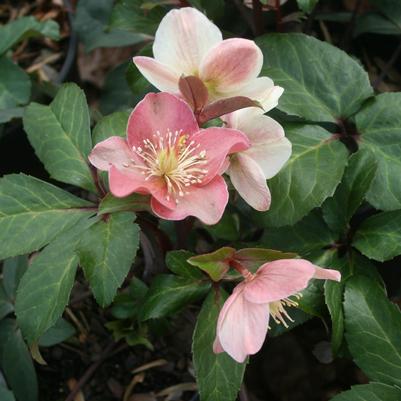
Common Name: Lenten Rose
Pale pink 2 1/2" flowers. The 'Lady' series offers vigorous upright plants with large flowers in single colors. Cut back old leaves in winter if they look shabby. Drought tolerant. Self sows where happy. Deer resistant.
[ More Information ]
|
|
Common Name: Lenten Rose
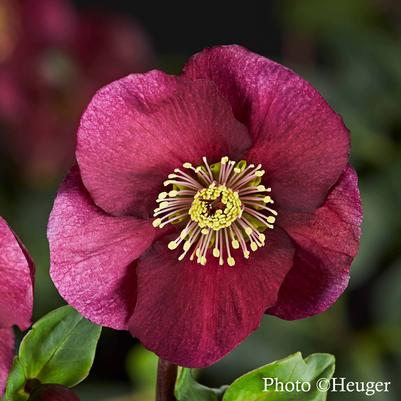
Deep red 2 1/2" flowers. The 'Lady' series offers vigorous upright plants with large flowers in single colors. Cut back old leaves in winter if they look shabby. Drought tolerant. Self sows where happy. Deer resistant.
[ More Information ]
|
|
|
Common Name: Lenten Rose
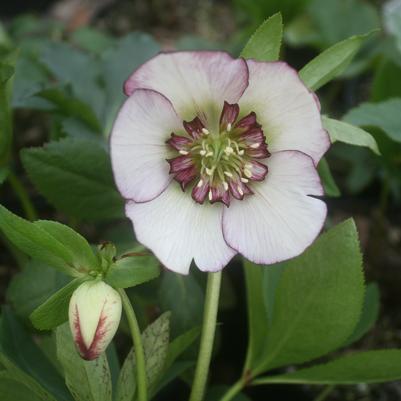
2 1/2" white flowers with red spotting at the base of each petal. The 'Lady' series offers vigorous upright plants with large flowers in single colors. Cut back old leaves in winter if they look shabby. Drought tolerant.
[ More Information ]
|
|
Common Name: Lenten Rose
Yellow 2 1/2" flowers. The 'Lady' series offers vigorous upright plants with large flowers and single colors. Cut back old leaves in winter if they look shabby. Drought tolerant. Self sows where happy. Deer resistant.
[ More Information ]
|
|
|
Common Name: Lenten Rose
A mix of mostly pink shades. This is seed propagated so there will be some natural variations in color and height.
[ More Information ]
|
|
Common Name: Helleborus
Fluffy, delicate cotton candy pink, double blooms are exquisite. Evergreen foliage. A wonderful groundcover for shady areas. Plant patented.
[ More Information ]
|
|
Common Name: Helleborus
Fantastic! Double blooms of sunny yellow are like miniature lotus flowers, some edged in red, others streaked or spotted with red. Good color, excellent vigor and pest resistance make this one a real keeper!
[ More Information ]
|
|
|
Common Name: Lenten Rose
Large, lovely apricot to peach pink blooms are held over leathery, evergreen leaves that are slightly ruffled.
[ More Information ]
|
|
Common Name: Daylily
7 striking deep fluorescent red-orange bloom has a brighter red halo and greenish throat. Sturdy scapes over pest-resistant foliage are loaded with buds. Blooms hold up in heat and humidity. Fragrant. Tetraploid. Mid-season.
[ More Information ]
|
|
Common Name: Daylily
6 cantaloupe orange blooms with large red raspberry eye zone, yellow-green throat and raspberry picotee edges. Lightly fragrant. Fragrant. Heat and humidty tolerant. Award winner. Tetraploid. Early season. Rebloomer. Evergreen.
[ More Information ]
|
|
Common Name: Daylily
5.5" mauve-pink bloom with purple eye and green throat. Blooms hold up in heat and humidity. Semi-evergreen. Award winner. Extended bloom-time. Tetraploid. Early season. Rebloomer.
[ More Information ]
|
|
Common Name: Daylily
6" light pink flowers with a striking yellow throat. TET. Midseason. Rebloomer. Attractive to butterflies and hummingbirds. Tolerant of coastal conditions and clay soil. Very resistant to drought and heat but can also tolerate wetter conditions.
[ More Information ]
|
|
Common Name: Daylily
4.5" fiery orange-red bloom with darker eye and yellow throat. Lights up the early fall garden like a bonfire. Gently reflexed petals have crimped edges. Blooms are heat and humidity tolerant. Fragrant. Tetraploid. Late season. Rebloomer.
[ More Information ]
|
|
Common Name: Daylily
27. 6. Hot! Hot! Hot! Bright orange recurved blooms with brilliant red eye zones and glowing gold throats. Call the fire department! HHT. TET. Mid-Late. Rebloomer.
[ More Information ]
|
|
Common Name: Daylily
6" velvety red-orange blooms with chartreuse throats are lightly ruffled. Blooms hold up in heat and humidity. Tetraploid. Mid-Late season. Rebloomer.
[ More Information ]
|
|
Common Name: Daylily
7" sunny yellow flowers with ruffled blush pink edges. Tetraploid. Midseason. Cut back after blooming to within 6" of the ground for better foliage and to encourage reblooming.
[ More Information ]
|
|
Common Name: Daylily
4 lovely lemon-yellow blooms have ruffled edges and a soft green throat. A daughter of 'Happy Returns, flowering continues throughout the season. Fragrant. Very Early-Late. Ever-blooming.
[ More Information ]
|
|
Common Name: Daylily
5" fantastic red-black, ruffled blooms with golden-green throats and flares over dark green foliage. Heavy bloomer. Mid-season.
[ More Information ]
|
|
Common Name: Daylily
4.5" brilliant red-orange blossoms over green foliage. Heat and humidity tolerant. Early midseason. Rebloomer. Attractive to butterflies and hummingbirds. Tolerant of coastal conditions and clay soil.
[ More Information ]
|
|
Common Name: Daylily
3.5" blooms are cream with a deep violet eye and green throat. Tall stems carry these blooms high so they are easy to see. Heat and humidity tolerant. Midseason. Rebloomer. Attractive to butterflies and hummingbirds.
[ More Information ]
|
|
Common Name: Daylily
3 slightly ruffled blooms of clear pink with a deeper pink halo have a large pale pink watermark and chartreuse yellow throat. TET. Early-Mid. Rebloomer.
[ More Information ]
|
|
Common Name: Daylily
5" creamy-yellow blooms with white midribs. Award winner. Extended bloom life. Fragrant. Early season. Divide every three years. Attractive to butterflies and hummingbirds. Tolerant of coastal conditions and clay soil.
[ More Information ]
|
|
Common Name: Daylily
A profuse number of warm, fragrant, butter yellow 6 blooms appear in July. It is a good rebloomer, reputed to be better than 'Stella de Oro' for southern gardens. An award winning variety that is free of daylily rust and pest resistant.
[ More Information ]
|
|
Common Name: Daylily
4.5 soft pink bloom has a hot pink eye with a matching hot pink picotee edge. Green throat and a nicely ruffled edge make this one a real charmer! High bud count. Evergreen. Tetraploid. Early. Rebloomer
[ More Information ]
|
|
Common Name: Daylily
6.5" Fragrant, orange-red spider-form bloom has a yellow throat and reflexed petals. Heat and humidity tolerant. Early midseason. Rebloomer. Attractive to butterflies and hummingbirds. Tolerant of coastal conditions and clay soil.
[ More Information ]
|
|
Common Name: Daylily
5" Brilliant, scarlet-red blooms with yellow eyes and ruffled edges are unusually color-fast. Heat and humidity tolerant. Robust foliage, wind-resistant stalks. Tetraploid. Midseason. Tolerant of coastal conditions and clay soil.
[ More Information ]
|
|
Common Name: Daylily
5.5 creamy bloom has a raspberry-purple eye and matching picotee petal edges, bright yellow-green throat. Blooms are heat and humidity tolerant. Tetraploid. Early. Attractive to butterflies and hummingbirds.
[ More Information ]
|
|
Common Name: Daylily
6" vibrant gold-orange blooms. Tetraploid. Midseason. Rebloomer. Attractive to butterflies and hummingbirds. Tolerant of coastal conditions and clay soil.
[ More Information ]
|
|
Common Name: Daylily
3.5" bright orange blooms with red banding and white midribs. Triple form of the common "roadside" daylily. Mid-Late season. Attractive to butterflies and hummingbirds. Tolerant of coastal conditions and clay soil.
[ More Information ]
|
|
Common Name: Daylily
3.5 two-tone orange blooms with deep gold throats are not large, but are borne in great profusion. The fragrant flowers are held high above foliage. FRA. HHT. AW. Mid. Rebloomer. Semi-evergreen.
[ More Information ]
|
|
Common Name: Daylily
4.25" Creamy yellow self with a maroon eye, yellow watermark, and green throat. Rounded petals have gold picotee edges. Extended bloom. Early to midseason. Rebloomer.
[ More Information ]
|
|
Common Name: Daylily
5.5 deep maroon red, almost black blooms with just a bit of ruffling. TET. Early-Mid. Rebloomer. Semi-evergreen.
[ More Information ]
|
|
Common Name: Daylily
4.5" double, cinnamon brown blossoms with a yellow throat and midribs are nicely ruffled. Heat and humidity tolerant. Early midseason. Rebloomer. Attractive to butterflies and hummingbirds.
[ More Information ]
|
|
Common Name: Daylily
4" double golden-yellow blooms with a darker eyezone. Midseason. Divide every three years. Attractive to butterflies and hummingbirds. Tolerant of coastal conditions and clay soil.
[ More Information ]
|
|
|
Common Name: Daylily
Luscious, fragrant, double deep red blooms have white edges and yellow-green throats. Early to mid-season. Rebloomer.
[ More Information ]
|
|
Common Name: Daylily
2". Plum-red blooms with a fine white edge and green throat. EXT. Midseason. Divide every three years. Attractive to butterflies and hummingbirds. Tolerant of coastal conditions and clay soil.
[ More Information ]
|
|
Common Name: Daylily
4.25" Butter-yellow blooms have a raspberry eye and a green throat. Heat and humidity tolerant. Award winner. Tetraploid. Late season. Attractive to butterflies and hummingbirds. Tolerant of coastal conditions and clay soil.
[ More Information ]
|
|
Common Name: Daylily
4.25" Ruffled pink blooms have a red eye and a soft green throat. Heat and humidity tolerant. Fragrant.Tetraploid. Early midseason. Rebloomer. Attractive to butterflies and hummingbirds.
[ More Information ]
|
|
Common Name: Daylily
4.25 fragrant, light pink blooms have deep pink eye-zones, lightly ruffled edges, yellow-green throats and light, but heady fragrance. Very pretty! Fragrant. Heat and humidity tolerant. Tetraploid. Mid-season. Rebloomer.
[ More Information ]
|
|
Common Name: Daylily
5.5" open faced soft peach-pink blooms have a large golden throat and very ruffled petals. Exceptional! Award winner. Midseason. Rebloomer. Attractive to butterflies and hummingbirds. Tolerant of coastal conditions and clay soil.
[ More Information ]
|
|
Common Name: Daylily
5.5 fresh yellow bloom has a delicate peach blush, pale midribs, yellow throat and lovely bright yellow ruffled edges. Nice, wide-open face perfect form. Tetraploid. Early-Mid. Rebloomer.
[ More Information ]
|
|
Common Name: Daylily
5" pink and lavender bi-color that is touted as having as many as 50 buds per stem. Late season. Excellent Rebloomer. Fragrant. Attractive to butterflies and hummingbirds. Tolerant of coastal conditions and clay soil.
[ More Information ]
|
|
Common Name: Daylily
5.5 deep fuchsia-pink blooms have a wide border of lighter pink and pale yellow edges; throat is green. Gently ruffled. Semi-evergreen. Tetraploid. Mid-season.
[ More Information ]
|
|
Common Name: Daylily
5" double red blooms with orange edges and yellow green throats over semi-evergreen foliage. Rebloomer. Attractive to butterflies and hummingbirds. Tolerant of coastal conditions and clay soil.
[ More Information ]
|
|
Common Name: Daylily
5.5" Rich yellow bloom with a wide red eye and golden yellow throat. Heat and humidity tolerant. Early mid-season. Tetraploid. Stout Medal. Attractive to butterflies and hummingbirds. Tolerant of coastal conditions and clay soil.
[ More Information ]
|
|
Common Name: Daylily
Unique, yellow flowers have a soft lavender overlay and pie crust-ruffled yellow margin with a matching yellow center. Midseason. Attractive to butterflies and hummingbirds. Tolerant of coastal conditions and clay soil.
[ More Information ]
|
|
Common Name: Daylily
4" canary-yellow blooms. Fragrant. Midseason. Rebloomer. Divide every three years. Attractive to butterflies and hummingbirds. Tolerant of coastal conditions and clay soil.
[ More Information ]
|
|
Common Name: Daylily
5" near white blooms. The purest white currently offered. Award winner. Early-Midseason. Semi-evergreen. Divide every three years. Attractive to butterflies and hummingbirds. Tolerant of coastal conditions and clay soil.
[ More Information ]
|
|
|
Common Name: Daylily
7 Creamy pink and yellow bitone blooms have greenish yellow centers and lightly ruffled edges. Fragrant. Extended bloom. Early. Rebloomer.
[ More Information ]
|
|
Common Name: Daylily
4 canary yellow blooms with recurved, overlapping petals and slightly ruffled margins. Good branching with 10-15 buds per stem that open symmetrically for a nice show.An improvement over H. 'Happy Returns', it continues to bloom into the fall.
[ More Information ]
|
|
Common Name: Daylily
Brilliant raspberry red 4 blooms have a red band, yellow watermarks and small green throat. Petal edges are gently ruffled. Individual blooms last up to 16 hours. Award winner.
[ More Information ]
|
|
Common Name: Daylily
3" light yellow blooms. Prized long blooming dwarf. The best 1 yellow rebloomer. Award winner. Extended bloom life. Fragrant. Early season. Rebloomer. Attractive to butterflies and hummingbirds. Tolerant of coastal conditions and clay soil.
[ More Information ]
|
|
Common Name: Daylily
5 velvety ruby-red, double flowers with contrasting yellow throats and thin golden picotee edges. Some blooms may be single.
Semi-evergreen. Tetraploid. Mid-Late season. Rebloomer.
[ More Information ]
|
|
Common Name: Daylily
5" Rose-pink, elegantly ruffled blooms with a green throat fading upward to yellow, surrounded by a soft pink halo. Lots of buds per stem. Heat and humidity tolerant. Mid to late season. Rebloomer.
[ More Information ]
|
|
Common Name: Daylily
5 1/2" clear yellow blooms. Extended bloom life. Fragrant. Midseason. Rebloomer. Divide every three years. Attractive to butterflies and hummingbirds. Tolerant of coastal conditions and clay soil.
[ More Information ]
|
|
Common Name: Daylily
6.5" bright red blooms with yellow green throats. Fragrant. Tetraploid. Early to Midseason. Divide every three years. Attractive to butterflies and hummingbirds. Tolerant of coastal conditions and clay soil.
[ More Information ]
|
|
Common Name: Daylily
4.25 bright pink ruffled bloom with rose-pink eye and green throat; recurved petals. Heavy bud count. Blooms are heat and humidity tolerant. Early-mid-season. Rebloomer.
[ More Information ]
|
|
Common Name: Daylily
5" Creamy melon-yellow blooms with green centers are fragrant and long-blooming. Ruffled petals are crimped. Heat and humidity tolerant. Mdi to late season. Rebloomer.
[ More Information ]
|
|
Common Name: Daylily
8" Huge yellow-orange blooms have narrow, slightly twisted petals. Heat and humidity tolerant. Mid to late season. Rebloomer. Attractive to butterflies and hummingbirds. Tolerant of coastal conditions and clay soils.
[ More Information ]
|
|
Common Name: Daylily
6" near white blooms. Award winner. Extended bloom life. Early-Midseason. Rebloomer. Divide every three years. Attractive to butterflies and hummingbirds. Tolerant of coastal conditions and clay soil.
[ More Information ]
|
|
Common Name: Daylily
Elegant 6 blooms of rosy pink have deeply ruffled edges, soft yellow centers and a wide, recurved form. Individual blooms last up to 16 hours. Award Winner.
[ More Information ]
|
|
Common Name: Daylily
5.5 glowing pink blooms with rosy eyes and yellow-green throats. Makes a wonderful statement when massed in the landscape. Heat and humidity tolerant. Tetraploid. Early-mid. Rebloomer.
[ More Information ]
|
|
Common Name: Daylily
7 Pastel peach blooms have ruffled petals with raspberry eyes and petal edges, green throats. Edges are occasionally flecked with gold. Stunning! Award winner. Extented bloom. Tetraploid. Early. Rebloomer. Evergreen.
[ More Information ]
|
|
Common Name: Daylily
5.5" Magnificent, red-black blooms with vivid chartreuse centers make a dramatic statement in the garden. Heat and humidity tolerant. Mid-season. Attractive to butterflies and hummingbirds. Tolerant of coastal conditions and clay soil.
[ More Information ]
|
|
Common Name: Daylily
6.5" ruffled yellow flowers. Tetraploid. Midseason. Very long blooming. Divide every three years. Attractive to butterflies and hummingbirds. Tolerant of coastal conditions and clay soil.
[ More Information ]
|
|
Common Name: Daylily
3.75 red blossoms have slightly lighter edges and chartreuse throats. Makes a wonderful garden display. Early-mid. Rebloomer. Attractive to butterflies and hummingbirds. Tolerant of coastal conditions and clay soil.
[ More Information ]
|
|
Common Name: Daylily
5 apricot bloom with ruby eye and wide picotee edges has a glowing orange throat. Excellent branching. Tetraploid. Mid-season. Rebloomer.
[ More Information ]
|
|
Common Name: Daylily
4" Purple blooms over green foliage. Lots of buds per stem. Attractive to butterflies and hummingbirds. Tolerant of coastal conditions and clay soil.
[ More Information ]
|
|
Common Name: Daylily
3" dark maroon red blooms with a yellow-green throats. Petals are slightly recurved. Award winner. Extended bloom life. Tetraploid. Early-Midseason. Rebloomer. Attractive to butterflies and hummingbirds. Tolerant of coastal conditions and clay soil.
[ More Information ]
|
|
Common Name: Daylily
2" Wine-red bloom with darker eye and yellow-green center. Recurved petals have slightly ruffled edges. Early. Rebloomer. Very long bloom season. Attractive to butterflies and hummingbirds. Tolerant of coastal conditions and clay soil.
[ More Information ]
|
|
Common Name: Daylily
6" double reddish-pink flowers with a yellow halo and highlights. Midseason. Divide every three years. Attractive to butterflies and hummingbirds. Tolerant of coastal conditions and clay soil.
[ More Information ]
|
|
|
Common Name: Daylily
4 1/2 violet lavender bloom has a dark purple eye zone around and extended chartreuse center. Very striking! mid-summer bloom time. High bud count.
[ More Information ]
|
|
Common Name: Daylily
6" ruffled soft yellow blooms. Award winner. Tetraploid. Early season. Semi-evergreen. Attractive to butterflies and hummingbirds. Tolerant of coastal conditions and clay soil.
[ More Information ]
|
|
Common Name: Daylily
3.5 soft yellow blooms in large numbers are fragrant and delicate looking, held high above the foliage excellent! Fragrant. Heat and humidity tolerant. Early. Everblooming. Semi-evergreen.
[ More Information ]
|
|
Common Name: Daylily
5.5" warm orange-brown blooms have a deeper chestnut eye and a yellow-gold throat. Blooms in mid to late season. Tetraploid. Attractive to butterflies and hummingbirds. Tolerant of coastal conditions and clay soil.
[ More Information ]
|
|
Common Name: Daylily
3" blush-pink blooms on dwarf plants. Extended bloom life. Early-Midseason. Rebloomer. Divide every three years. Attractive to butterflies and hummingbirds. Tolerant of coastal conditions and clay soil.
[ More Information ]
|
|
Common Name: Daylily
4" beige pink blooms have a wide plum-red eye and a yellow throat. Lightly ruffled petals are gently recurved. Heat and humidity tolerant. Midseason. Rebloom. Tetraploid. Attractive to butterflies and hummingbirds.
[ More Information ]
|
|
Common Name: Daylily
5". Brilliant orange blooms have a deeper red-orange eye, a yellow-orange throat and ruffled petal edges. Tetraploid. Midseason. Attractive to butterflies and hummingbirds.Tolerant of coastal conditions and clay soil.
[ More Information ]
|
|
Common Name: Daylily
6.5" Garnet blooms with recurved, narrow petals, yellow star-shaped eyes and chartreuse throats, are held high above the foliage to make this a garden standout. Heat & humidity tolerant. Midseason. Semi-evergreen. Attracts butterflies & hummingbirds.
[ More Information ]
|
|
Common Name: Daylily
6". Large, ruffled solid purple bloom has a yellow-green throat. Lightly fragrant, elegant and mysterious. Strong stems. Heat and humidty tolerant. Tetraploid. Mid-season.
[ More Information ]
|
|
Common Name: Daylily
4.5" rose-pink blooms with a purple band. Fragrant. Midseason. Divide every three years. Attractive to butterflies and hummingbirds. Tolerant of coastal conditions and clay soil.
[ More Information ]
|
|
Common Name: Daylily
5.5" rosy pink blooms have a slightly deeper pink halo and ruffled petals. Blooms are heat and humidity tolerant. Tetraploid. Early-midseason. Rebloomer. Attractive to butterflies and hummingbirds. Tolerant of coastal conditions and clay soil.
[ More Information ]
|
|
Common Name: Daylily
4" cream petals with a contrasting purple eyezone and green throat. Award winner. Fragrant. Early to Midseason. Rebloomer. Divide every three years. Attractive to butterflies and hummingbirds. Tolerant of coastal conditions and clay soil.
[ More Information ]
|
|
Common Name: Daylily
6" flat, wide creamy peach blooms with violet eyes that flare out at the edges appear on dwarf plants small enough for a container, but fantastic in the garden. Heat and humiduty tolerant. Early. Rebloomer. Tetraploid. Semi-evergreen.
[ More Information ]
|
|
Common Name: Daylily
2.75" Miniature, cranberry-red blooms have a narrow water-mark and bright chartreuse throat. Petals are slightly ruffled. Fragrant. Midseason. Rebloomer. Award-winner.This nocturnal miniature opens the next day's blossoms the prior evening.
[ More Information ]
|
|
Common Name: Daylily
4.75 pale coral pink bloom has distinct raspberry pink eye zone, a yellow throat and delightfully ruffled edges. Excellent bloomer with high bud counts. Heat and humidity tolerant. Fragrant. Tetraploid. Early-Midseason. Rebloomer.
[ More Information ]
|
|
Common Name: Daylily
Miniature (1.5") pale yellow blooms over short green foliage make this a cute addition to the border. Heat and humidity tolerant. Very early season. Extended bloom. Attractive to butterflies and hummingbirds.
[ More Information ]
|
|
Common Name: Daylily
5.5" Fragrant, ruffled ivory blooms have a light pink blush. Heat and humidity tolerant. Midseason. Rebloomer. Semi-evergreen. Attractive to butterflies and hummingbirds. Tolerant of coastal conditions and clay soil.
[ More Information ]
|
|
Common Name: Daylily
Fragrant, 5 rich red flowers have slightly recurved petals and bright yellow throats, setting the garden ablaze through mid-summer. High bud count means a long bloom season.
[ More Information ]
|
|
Common Name: Daylily
5" Fragrant, double golden-yellow blooms will light up the garden in early summer. Heat and humidity tolerant. Early midseason. Rebloomer. Attractive to butterflies and humming birds. Tolerant of coastal conditions and clay soil.
[ More Information ]
|
|
Common Name: Daylily
Medium purple, 2.5' blooms have yellow throats, darker purple veining and almost white sepal tips. The petal edges are nicely crinkled. This miniature starts in early summer and repeats in mid to late season.
[ More Information ]
|
|
Common Name: Daylily
5.5" Fire-engine red ruffled blooms have a green throat base. Fade-resistant blooms. Heat and humidity tolerant. Tetraploid. Late midseason. Rebloomer. Attractive to butterflies and hummingbirds.
[ More Information ]
|
|
Common Name: Daylily
6" tangerine-orange blooms with a burnt orange eyezone. Award winner. Extended bloom life. Tetraploid. Early-Midseason. Divide every three years. Attractive to butterflies and hummingbirds. Tolerant of coastal conditions and clay soil.
[ More Information ]
|
|
Common Name: Daylily
4.5" bright rosy-pink flowers have a deeper rose eyezone and a vivid yellow throat. The first pink everbloomer that blooms from May to frost. Bred by Darrel Apps who brought us 'Happy Returns'. Early. Rebloomer. Plant Patented.
[ More Information ]
|
|
Common Name: Daylily
3" Ruby-red flowers that are touted as being as long blooming as 'Stella d'Oro'. Fragrant. Early. Rebloomer. Attractive to butterflies and hummingbirds. Tolerant of coastal conditions and clay soil.
[ More Information ]
|
|
Common Name: Daylily
7" Fragrant, creamy pink blooms with ruffled edges and yellow-green throats. Heat and humidity tolerant. Tetraploid. Midseason. Rebloomer. Attractive to butterflies and hummingbirds. Tolerant of coastal conditions and clay soil.
[ More Information ]
|
|
Common Name: Daylily
6" Double, light apricot yellow blooms with green throats are ruffled and recurved. Heat and humidity tolerant. Fragrant. Mid-late season. Rebloomer. Attractive to butterflies and hummingbirds. Tolerant of coastal conditions and clay soil.
[ More Information ]
|
|
Common Name: Daylily
5.5" Light salmon-pink blooms with yellow-green throats and ruffled petals appear mid to late season. Heat and humidity tolerant. Rebloomer. Attractive to butterflies and hummiongbirds. Tolerant of coastal conditions and clay soil.
[ More Information ]
|
|
|
Common Name: Daylily
5". Wonderfully fragrant, warm pink, double blooms have soft yellow centers, green throats and piecrust petal edges. Award winner.
[ More Information ]
|
|
Common Name: Daylily
4" ruby red blooms with slightly overlapping petals have pale plum watermarks and green throats. Extended bloom. Midseason.
[ More Information ]
|
|
|
Common Name: Daylily
5 1/2 double blooms are mauve-orange with an amber throat. Early midseason. Tetraploid.
[ More Information ]
|
|
Common Name: Daylily
5.5" Fragrant, tangerine-coral blooms with coral-red band. Heat and humidty tolerant. Tetraploid. Extended bloom. Midseason. Rebloomer. Attractive to butterflies and hummingbirds. Tolerant of coastal conditions and clay soil.
[ More Information ]
|
|
Common Name: Daylily
8.5" spider-like yellow blooms with a lime green eye. Midseason. Rebloomer. Divide every three years. Attractive to butterflies and hummingbirds. Tolerant of coastal conditions and clay soil.
[ More Information ]
|
|
Common Name: Daylily
2.5" golden-yellow blooms. A reliable repeat blooming dwarf. Extended bloom life. Fragrant. Early season. Rebloomer. Attractive to butterflies and hummingbirds.
[ More Information ]
|
|
Common Name: Daylily
4.25" apricot-pink flowers with red-tinted edges, a strawberry-red eye zone, and yellow throat. Ruffled edges on reflexed petals. Stout Medal Award Winner. Extended bloom life. Heat and humidity tolerant. Tetraploid. Early to Midseason. Rebloomer.
[ More Information ]
|
|
Common Name: Daylily
6" Clear rich purple blooms with chartreuse throats, white watermarks and gently ruffled petals are held nicely above foliage. Very lightly fragrant. Tetraploid. Extended bloom.
[ More Information ]
|
|
Common Name: Daylily
6.5" Classic rose-pink ruffled blooms with a yellow water mark & green throat. Fragrant. Early-Midseason. Rebloomer. Heat and humidity tolerant. Semi-evergreen.
[ More Information ]
|
|
Common Name: Daylily
5 highly fragrant near white bloom with gently ruffled petals, a pale yellow eye, and tiny celery green throat is one of the best. Vigorous plants. Fragrant. Extended blom. Early-Mid. Rebloomer.
[ More Information ]
|
|
Common Name: Daylily
5.5. Deep, burgundy purple blooms with chartreuse throats are nicely ruffled and held well above foliage. One of the best purples! Color holds up well all day. Super! Fragrant. Heat and humidity tolerant. Mid-season bloomer. Semi-evergreen.
[ More Information ]
|
|
Common Name: Daylily
3.5" soft yellow blooms. Award winner. Early-Midseason. Divide every three years. Attractive to butterflies and hummingbirds. Tolerant of coastal conditions and clay soil.
[ More Information ]
|
|
Common Name: Daylily
Huge 7 bright orange blooms with soft orange rays and darker orange centers light up the garden. Hardy and vigorous, heat tolerant, and pest resistant! Tetraploid. Early-Mid. Rebloomer. Semi-evergreen.
[ More Information ]
|
|
Common Name: Daylily
5.5". Creamy blush blooms have large, angular dark maroon eyes. Petals are lightly ruffled and recurved, centers orange. 24 wide. Tetraploid. Early-mid-season. Rebloomer. Semi-evergreen.
[ More Information ]
|
|
Common Name: Daylily
5" orchid-pink blooms with a dark purple eyezone and green throat. Award winner. Extended bloom life. Fragrant. Tetraploid. Heat and humidity tolerant. Early to Midseason. Rebloomer. Attractive to butterflies and hummingbirds.
[ More Information ]
|
|
Common Name: Daylily
5. Large, fragrant, rich rose-pink blooms with yellow-green throats are gently ruffled. Their nearly perfect form will add elegance and grace to your garden. Fragrant. Heat and humidity tolerant. Mid-season.
[ More Information ]
|
|
Common Name: Daylily
4.5" ruby-red blooms with a contrasting lemon-lime throat and ruffled, pie crust edges. High bud count. Midseason. Rebloomer. Divide every three years. Attractive to butterflies and hummingbirds. Tolerant of coastal conditions and clay soil.
[ More Information ]
|
|
Common Name: Daylily
4. Lightly fragrant, orange ruffled blossom has ruby red eye-zone and ruby picotee edges, yellow-orange throat. Packs a big punch! Fragrant. Heat and humidity tolerant. Tetraploid. Mid-season. Rebloomer.
[ More Information ]
|
|
Common Name: Daylily (Old-fashioned)
4.5" Copper colored blooms have a yellow throat and lighter midribs. Common roadside daylily. Spreads quickly. Midseason. Attractive to butterflies and hummingbirds. Tolerant of coastal conditions and clay soil.
[ More Information ]
|
|
Common Name: Daylily
3" golden-yellow blooms with bronze on underside of petals. The first daylily to bloom in spring. Early season. Reblooomer. Divide every three years. Attractive to butterflies and hummingbirds. Tolerant of coastal conditions and clay soil.
[ More Information ]
|
|
Common Name: Rupturewort (Green Carpet)
Evergreen carpeter with tiny leaves that turn bronze in winter. Self seeds. Excellent between stepping stones. Requires well-drained soil. Drought tolerant once established. Tolerates heavy foot traffic. Space on 6"-10" centers.
[ More Information ]
|
|
|
Common Name: Dame's Rocket
Showy white flowers over large green leaves. Attractive to butterflies and hummingbirds. Great fall color. Drought tolerant once established. Native biennial that self seeds.
[ More Information ]
|
|
Common Name: Dame's Rocket
Showy purple flowers over large green leaves. Attractive to butterflies and hummingbirds. Great fall color. Drought tolerant once established. Native biennial that self seeds.
[ More Information ]
|
|
Common Name: Coral Bells
This glossy-leaved clumper displays rich purple foliage with silver overlays and pink flowers. Attractive to butterflies and hummingbirds. Deer resistant. Tolerant of coastal conditions.
[ More Information ]
|
|
Common Name: Coral Bells
Nearly charcoal-black, shiny leaves with maroon undersides maintain their dark color most of the year. Creamy blooms appear June to July above the compact mounds of round-lobed leaves. Plant Patented.
[ More Information ]
|
|
Common Name: Coral Bells
Vigorous clumps of large, hairy, purple-bronze leaves (8 wide), which have a very shiny appearance and a wavy margin. Flowering spikes of small creamy flowers appear in September and October. Native.
[ More Information ]
|
|
Common Name: Coral Bells
A wonderful heuchera for hot, humid climates. Its caramel-orange glow, soft texture, mounding form and rugged nature make it a must-have for southern gardens. Delicate sprays of pinkish white flowers appear in mid to late summer. Plant Patented.
[ More Information ]
|
|
Common Name: Coral Bells
Wonderful citrus green leaves; creamy white blooms in late summer. Another great new introduction having the hardy H. villosa in its heritage, it is both heat and sun tolerant. Plant patented.
[ More Information ]
|
|
Common Name: Coral Bells
Velvety purple leaves with darker veins are topped with spikes of pale pink flowers. This variety is extra vigorous as it has our native H. villosa as a parent! Plant Patented. Attractive to butterflies and hummingbirds.
[ More Information ]
|
|
Common Name: Coral Bells
Huge peachy-orange leaves accented with silver are fantastic spring through summer, changing to lovely rose-purple in cooler fall weather. Creamy white blooms. H. villosa parentage makes this another southern winner.
[ More Information ]
|
|
Common Name: Coral Bells
Wow! Leaves emerge in spring with hot pink polka dots on burnished maroon-black leaves, which lighten with cream and pink dots as the season progresses. A totally new look! Plant Patented.
[ More Information ]
|
|
Common Name: Coral Bells
Leaf coloration changes throughout the seasons. In the spring, the young foliage is chartreuse with a heavy smattering of reddish purple in the center. Mature foliage turns brick red with a bright chartreuse to gold edge and silvered undersides.
[ More Information ]
|
|
Common Name: Coral Bells
Darkest of the new sun-tolerant Heuchera cultivars, 'Mocha' has immense leaves that emerge copper-brown in the spring and intensify to solid coffee-black over the summer. Cream flowers add a contrast in late summer. Plant patented.
[ More Information ]
|
|
Common Name: Coral Bells
Deep maroon leaves have lovely silver marbling. White bell-shaped flowers. Attractive to butterflies and hummingbirds. Deer resistant. Tolerant of coastal conditions.
[ More Information ]
|
|
Common Name: Coral Bells
Exceptional! Near black, shiny smooth leavesar ethe darkest of any Heuchera we've seen. Great for accenting bright foliage plants like Lysimachia numm. 'Aurea'. Greenish-white flowers. Plant Patented. Attractive to butterflies and hummingbirds.
[ More Information ]
|
|
Common Name: Coral Bells
Broad green leaves with a silver overlay and purplish-red veining. The first Heuchera with 'Green Spice'-type foliage and lovely rose pink flowers. Slightly more compact than 'Green Spice'. Attractive to butterflies and hummingbirds. Deer resistant.
[ More Information ]
|
|
Common Name: Coral Bells
Foliage is shimmering plum-purple with silver veining and a tight habit. Excellent companion for variegated, silver, and golden plants. Light green to white flowers. Attractive to butterflies and hummingbirds. Deer resistant.
[ More Information ]
|
|
Common Name: Coral Bells
Deep, dark purple-green over rich beet-red ruffled leaves form a nice mound perfect for the front of the border. This was an immediate favorite here at the nursery. Ivory blooms on scarlet stems in mid to late summer.
[ More Information ]
|
|
Common Name: Coral Bells
Metallic silver overlay with dark bronze veining and white flowers. Plant Patented. Attractive to butterflies and hummingbirds. Deer resistant. Tolerant of coastal conditions. Best grown in fertile, moist but well-drained soil.
[ More Information ]
|
|
Common Name: Coral Bells
Brightly variegated creamy-white and green leaves make the perfect backdrop for the medium pink flowers. The foliage takes on salmon-pink overtones in cold weather. Attractive to butterflies and hummingbirds. Deer resistant.
[ More Information ]
|
|
Common Name: Coral Bells
Large, vigorous mounds of huge cinnamon orange leaves turn to burnished copper as the weather cools. Wands of creamy white blooms appear in late summer. Another villosa hybrid with outstanding heat and humidity tolerance.
[ More Information ]
|
|
Common Name: Coral Bells
Huge, dark, plum-black leaves with distinct metallic silver veins. Spikes of greenish white flowers in early summer. Attractive to butterflies and hummingbirds. Deer resistant. Tolerant of coastal conditions.
[ More Information ]
|
|
Common Name: Coral Bells
Broad green leaves with a silver overlay and purplish-red veining. Attractive to butterflies and hummingbirds. Deer resistant.Tolerant of coastal conditions. Best grown in fertile, moist but well-drained soil.
[ More Information ]
|
|
Common Name: Coral Bells
Strongly marbled and veined silver and green leaves rival any tissue culture varieties. Spring foliage is purple and short stalks of creamy white blooms appear early in the season. Fantastic foliage is great for garden or containers.
[ More Information ]
|
|
Common Name: Coral Bells
Sprays of white flowers over wrinkled, deep purple foliage that fades to bronzy green in heat. 1991 Perennial of the Year. Native. Attractive to butterflies and hummingbirds. Deer resistant. Tolerant of coastal conditions. V
[ More Information ]
|
|
Common Name: Coral Bells
Flowers in shades of light pink, deep crimson and even some whites. Green mounding foliage. Native. Attractive to butterflies and hummingbirds. Deer resistant. Tolerant of coastal conditions. Best grown in fertile, moist but well-drained soil.
[ More Information ]
|
|
|
Common Name: Foam Flower
12"/18". Deep ruby red bells appear in early summer on slender stems reaching above mounds of compact green foliage. Excellent for cutting!
[ More Information ]
|
|
Common Name: Coral Bells
Fountains of white flowers above fuzzy chartreuse to lime-green foliage. Very heat tolerant and drought tolerant once established. Wonderful fall color. Attractive to butterflies and hummingbirds. Deer resistant. Tolerant of coastal conditions.
[ More Information ]
|
|
Common Name: Coral Bell
Large purple leaves are accented by sprays of delicate white flowers in September. Native variety that is very heat tolerant and drought tolerant once established. Wonderful fall color. Attractive to butterflies and hummingbirds. Deer resistant.
[ More Information ]
|
|
Common Name: Coral Bells
Big rose pink leaves in spring darken to plum purple as the season progresses. Creamy white blooms in late spring. Very heat and humidity tolerant. Villosa / americana hybrid.
[ More Information ]
|
|
Common Name: Coral Bells
Same habit and huge leaves as 'Southern Comfort' in a chartreuse lime green. Red veins in cool weather and attractive stems of densely packed white blooms. Very heat and humidity tolerant. Villosa / americana hybrid.
[ More Information ]
|
|
|
Common Name: Coral Bells
Glowing wine-red, mid-sized leaves form a moderate sized mound that is topped by pink and white blooms on red stems in spring and summer. Reputed to take more sun than most. Plant patented.
[ More Information ]
|
|
Common Name: Coral Bells
Large round-lobed leaves emerge chartreuse with red centers. In spring and fall the red becomes stronger, while the veins stand out in lime green. In summer the leaves are lighter with a delicate silver overlay. Plant Patented.
[ More Information ]
|
|
Common Name: Foamy Bells
Deeply cut foliage is gold with red veins in spring to mid summer. In late summer leaves are green with red veins, and in fall the older foliage turns orange pink. Small white flower on 20 stems. Plant patented.
[ More Information ]
|
|
|
Common Name: Foamy Bells
Deep pink, airy blooms on stalks to 18" over light green leaves veined in crimson.
[ More Information ]
|
|
Common Name: Foamy Bells
Attractive dark green mottled foliage has prominent reddish veining. Lovely pastel pink flowers in early summer. Attractive to butterflies and hummingbirds. Long blooming. Grow in moist but well-drained soil.
[ More Information ]
|
|
Common Name: Hardy Hibiscus
Green maple-like leaves are thick and compact which makes the plant seem fuller. 8"-9" lavender blooms are very ruffled. Prolific bloomer. Very sought after. Best grown in moist soil with some drainage. Deer resistant. Plant Patented.
[ More Information ]
|
|
Common Name: Hardy Hibiscus
12" red to burgundy flowers over dissected foliage with a purplish cast and red stems. Best grown in moist soil with some drainage. Deer resistant. Plant Patented. Very slow to break dormancy in spring. Attractive to butterflies and hummingbirds.
[ More Information ]
|
|
Common Name: Hardy Hibiscus
Maple-like leaves are copper-red with orangish-red undersides. Light pink flowers have a bright red eye which streaks into the petals. Flowers are up to 12" across and have some ruffling and overlapping. Deer resistant. Plant Patented.
[ More Information ]
|
|
|
Common Name: Hardy Hibiscus
24'-36. 7-8 deep, burgundy red blooms appear from July to September on vigorous, rounded, somewhat shrubby plants. Excellent for the smaller garden or large containers. Plant Patented. Zones 5-9.
[ More Information ]
|
|
Common Name: Hardy Hibiscus
Huge rose-red flowers and disease resistant foliage. Best grown in moist soil with some drainage. Tolerant of clay soil. Very slow to break dormancy in spring. Attractive to butterflies and hummingbirds. Deer resistant.
[ More Information ]
|
|
Common Name: Hardy Hibiscus
8-10 peppermint pink blooms with red centers on clumps of large, maple-leaf shaped green foliage. Plant Patented.
[ More Information ]
|
|
Common Name: Hardy Hibiscus
10" plum-colored blooms are borne against striking dark purple, maple-cut leaves. Best grown in moist soil with some drainage. Attractive to butterflies and hummingbirds. Deer resistant. Tolerant of clay soil. Very slow to break dormancy in spring.
[ More Information ]
|
|
Common Name: Hardy Hibiscus
Plants display 10" flowers in shades of pink, red, or white. Tolerant of wet soils, even standing water. Native. Tolerant of clay soil. Very slow to break dormancy in spring. Attractive to butterflies and hummingbirds. Deer resistant.
[ More Information ]
|
|
Common Name: Hardy Hibiscus
Red blooms on tall upright plants. Red tinted maple-like leaves on reddish stems. Native. Tolerant of wet soils and even standing water. Very slow to break dormancy in spring. Attractive to butterflies and hummingbirds. Deer resistant.
[ More Information ]
|
|
Common Name: Hardy Hibiscus
Lovely soft pink to white blooms with deep pink centers get 4-5 across. This long-blooming east coast native is great for wet locations and water side, but will tolerate dry spells.
[ More Information ]
|
|
Common Name: Hardy Hibiscus
Large 9" showy flowers in a mixture of red, white, or pink. Dwarf plants. Tolerant of wet soils and even standing water. Native. Very slow to break dormancy in spring. Attractive to butterflies and hummingbirds. Deer resistant.
[ More Information ]
|
|
Common Name: Hardy Hibiscus
Large 9" flowers are blush-pink with a deeper pink eye. Dwarf plants. Tolerant of wet soils and even standing water. Native. Very slow to break dormancy in spring. Attractive to butterflies and hummingbirds. Deer resistant. Tolerant of clay soil.
[ More Information ]
|
|
Common Name: Hardy Hibiscus
Large 9" flowers are solid red. Dwarf plants. Tolerant of wet soils and even standing water. Native. Very slow to break dormancy in spring. Attractive to butterflies and hummingbirds. Deer resistant. Tolerant of clay soil.
[ More Information ]
|
|
Common Name: Hardy Hibiscus
Large 9" flowers are white with a red eye. Dwarf plants. Tolerant of wet soils and even standing water. Native. Very slow to break dormancy in spring. Attractive to butterflies and hummingbirds. Deer resistant. Tolerant of clay soil.
[ More Information ]
|
|
Common Name: Hardy Hibiscus
Large, long-lasting clear white blooms with no eye. Exceptional. Best grown in moist soil with some drainage. Tolerant of clay soil. Very slow to break dormancy in spring. Attractive to butterflies and hummingbirds. Deer resistant.
[ More Information ]
|
|
Common Name: Hardy Hibiscus
Large pink flowers with a distinct red eye. Foliage resembles maple leaves. Best grown in moist soil with some drainage. Tolerant of clay soil. Very slow to break dormancy in spring. Attractive to butterflies and hummingbirds. Deer resistant.
[ More Information ]
|
|
Common Name: Hardy Hibiscus
Slightly ruffled, deep red 10" blooms. Mahogany stems with dark green leaves. Best grown in moist soil with some drainage. Tolerant of clay soil. Very slow to break dormancy in spring. Attractive to butterflies and hummingbirds. Deer resistant.
[ More Information ]
|
|
Common Name: Hardy Hibiscus
Unusual blooms whose rose-pink and red petals alternate to produce a pinwheel effect. Foliage resembles maple leaves. Best grown in moist soil with some drainage. Attractive to butterflies and hummingbirds. Deer resistant.
[ More Information ]
|
|
Common Name: Leopard Plant
Bluish-green leaves with red-brown marbling and yellow flowers. Grown primarily for its attractively spotted foliage. Very decorative. Deadhead to prevent self seeding.
[ More Information ]
|
|
|
Common Name: Dragonmouth
Basal rosettes of glossy, deep green, quilted leaves and whorls of rosy red to pink, bell-shaped blooms characterize this European native. A habitant of rocky slopes and meadows, it prefers moist, but well-drained conditions.
[ More Information ]
|
|
Common Name: Plantain Lily
Deep blue-green leaves are heavily cupped and corrugated. Foliage is so cupped that when it rains, they often hold water in their leaves. An excellent specimen hosta. Near white flowers in July. Attractive to butterflies and hummingbirds.
[ More Information ]
|
|
Common Name: Plantain Lily
Green leaves with irregular creamy-white margins that maintain their variegation all season. Lavender flowers in July. Award winner. Attractive to butterflies and hummingbirds. Can be grown under black walnut trees.
[ More Information ]
|
|
Common Name: Plantain Lily
Huge (3.5), fragrant, double white blooms appear above mounds of glossy green foliage from late July to September. Probably the most fragrant hosta available!
[ More Information ]
|
|
Common Name: Plantain Lily
Large, heavily corrugated, greenish-gold leaves. A classic gold hosta. Pale lavender flowers. Award winner. Attractive to butterflies and hummingbirds. Can be grown under black walnut trees.
[ More Information ]
|
|
Common Name: Hosta / Plantain Lily
Dark green leaves framed with a golden border. Excellent landscape hosta. Lavender flowers in August. Attractive to butterflies and hummingbirds. Can be grown under black walnut trees.
[ More Information ]
|
|
Common Name: Plantain Lily
A miniature as cute as its name. Lovely rounded, little heart-shaped green leaves form broad mounds that are ideal for edging or use as a groundcover. Lavender blooms in July. Can be grown under black walnut trees.
[ More Information ]
|
|
Common Name: Plantain Lily
Thick, heavily corrugated leaves are rich blue-green and can reach 15" long and 10 1/2" wide. Slug resistant. One of the best large hostas. Near white blooms in June. Award winner. Attractive to butterflies and hummingbirds.
[ More Information ]
|
|
Common Name: Plantain Lily
Huge, heavily textured blue leaves are held like angel's wings and can reach 16" long and 12" wide. One of the finest blue hostas. Near white flowers in July. Attractive to butterflies and hummingbirds. Can be grown under black walnut trees.
[ More Information ]
|
|
Common Name: Plantain Lily
Blue, heart-shaped leaves form dense mounds. Fast growth rate and good vigor make it a good ground cover and one of the best landscape hostas. Lavender blooms in July.
[ More Information ]
|
|
Common Name: Plantain Lily
Shiny dark green leaves emerge bluish-green and mature to form a large mound. Near white flowers in July. Award winner. Attractive to butterflies and hummingbirds. Can be grown under black walnut trees.
[ More Information ]
|
|
Common Name: Plantain Lily
Blue wedge-shaped leaves have heavy substance and are slug resistant. One of the bluest hostas. Pale lavender flowers in August. Attractive to butterflies and hummingbirds. Can be grown under black walnut trees.
[ More Information ]
|
|
Common Name: Plantain Lily
Heart-shaped blue-green leaves have heavy substance and are cupped. Blooms of Bressingham Introduction. Lavender flowers. Attractive to butterflies and hummingbirds. Can be grown under black walnut trees.
[ More Information ]
|
|
Common Name: Hosta / Plantain Lily
Touted as the best tokudama on the market. Large puckered gold leaves have a streaky blue margin. White flowers in July. Attractive to butterflies and hummingbirds. Can be grown under black walnut trees.
[ More Information ]
|
|
Common Name: Plantain Lily
Rich dark green, seersuckered leaves with wide, irregular white margins. Pale lavender flowers in July. Attractive to butterflies and hummingbirds. Can be grown under black walnut trees.
[ More Information ]
|
|
|
Common Name: Plantain Lily
Large, heavily puckered, golden leaves with wide streaky dark green margins form large clumps at maturity. Heavy, slug-resistant leaves are topped by stems of near-white blossoms in early summer. Exceptional! Zones 3-8.
[ More Information ]
|
|
Common Name: Plantain Lily
Pointed leaves are mostly white with irregular dark green margins. The name comes from its prominent cherry-red flower scapes and seed pods. Purple flowers in July and August. Attractive to butterflies and hummingbirds.
[ More Information ]
|
|
Common Name: Hosta / Plantain Lily
Creamy-white margined, corrugated green foliage. Lavender flowers on leafy scapes in July. Attractive to butterflies and hummingbirds. Can be grown under black walnut trees.
[ More Information ]
|
|
|
Common Name: Plantain Lily
This sport of 'Great Expectations' has large, nearly round, bluish-green leaves that are heavily corrugated and have narrow creamy white to yellow centers. White blooms appear in summer.
[ More Information ]
|
|
|
Common Name: Plantain Lily
Pointed, blue-green heart-shaped leaves have a yellow margin. Can take some sun. Lavender flowers in late summer. Attractive to buttterflies and hummingbirds.
[ More Information ]
|
|
Common Name: Plantain Liliy
Long tapered leaves of velvety blue have wavy margins. Clumps may reach 60 wide and are topped by medium lavender blooms in early summer.
[ More Information ]
|
|
|
Common Name: Plantain Lily
Striking sport of 'Golden Tiara' with reverse variegation. Green margins surround a golden center. Purple flowers in July and August. Attractive to butterflies and hummingbirds. Can be grown under black walnut trees.
[ More Information ]
|
|
|
Common Name: Plantain Lily
This sport of 'Whirlwind' has wonderful quilted leaves of black-green with brilliant white centers. Unlike its parent its color does not fade. Lavender blooms appear in mid-summer.
[ More Information ]
|
|
Common Name: Plantain Lily
Heart-shaped leaves have white centers and broad dark green margins. Sport of 'Patriot'. Forms a medium sized mound. Exceptional. Lavender flowers in August. Attractive to butterflies and hummingbirds. Can be grown under black walnut trees.
[ More Information ]
|
|
Common Name: Plantain Lily
Medium sized plant with chalky powder blue foliage. Lovely near-white, slightly fragrant flowers in August. Attractive to butterflies and hummingbirds. Can be grown under black walnut trees.
[ More Information ]
|
|
Common Name: Hosta / Plantain Lily
Heart-shaped, glossy apple-green leaves with irregular creamy-yellow margins. Vigorous grower. Hosta of the Year 1998. Spikes of fragrant near-white flowers. Attractive to butterflies and hummingbirds.
[ More Information ]
|
|
Common Name: Plantain Lily
Thick dark green foliage with narrow, white margins that last all season. Premier landscaping hosta. Lavender flowers in August. Attractive to butterflies and hummingbirds. Can be grown under black walnut trees.
[ More Information ]
|
|
Common Name: Plantain Lily
Large, puckered blue-green leaves with broad golden margins. Leaves can reach 13" long and 9" wide. Leaf edges tend to burn easily. Near white flowers in June and July. Attractive to butterflies and hummingbirds.
[ More Information ]
|
|
Common Name: Hosta / Plantain Lily
Bright gold, glossy leaves. Fast growing sport of 'Guacamole'. Lavender flowers in August. Attractive to butterflies and hummingbirds. Can be grown under black walnut trees..
[ More Information ]
|
|
Common Name: Plantain Lily
Small elongated dark green leaves are edged in white. THE hosta for edging. Rapid grower. Purple blooms in August. Attractive to butterflies and hummingbirds. Can be grown under black walnut trees.
[ More Information ]
|
|
Common Name: Hosta / Plantain Lily
Center changes from green to chartreuse to gold to white gold and is surrounded by a dark green margin. A rapid grower and excellent hosta. Bright light needed for best color. Pale lavender flowers in July and August.
[ More Information ]
|
|
|
Common Name: Plantain Lily
A sport of Golden Tiara, this one forms bright gold, dense mounds of all gold, rounded leaves to brighten a dark corner of the garden. Slower growing than G. Tiara. Purple striped flowers in late July
[ More Information ]
|
|
Common Name: Hosta / Plantain Lily
Outstanding sport of H. sieboldiana 'Elegans'. Center color changes from yellow in the spring to creamy-white with blue-green margins. Leaves are cupped and have thick substance. Slug resistant. Slow grower. Near white flowers in July.
[ More Information ]
|
|
Common Name: Plantain Lily
Slightly corrugated foliage with green margins that surround a beautiful chartreuse and later, bright gold, center. Leaves can reach 11" long and 9" wide. Reverse variegation of 'Fragrant Bouquet'. Hosta of the Year 2002. Fragrant near white flowers.
[ More Information ]
|
|
Common Name: Plantain Lily
Thick blue, spear-shaped, heavily ribbed leaves that hold their color well. Great in the landscape. Bluish-lavender flowers in July and August. Award winner. Attractive to butterflies and hummingbirds. Can be grown under black walnut trees.
[ More Information ]
|
|
Common Name: Hosta / Plantain Lily
Large pale green oval leaves. Fast grower. Some sun tolerance. Fragrant pale lavender flowers in August. Attractive to butterflies and hummingbirds. Can be grown under black walnut trees.
[ More Information ]
|
|
|
Common Name: Hosta / Plantain Lily
Dark green leaves with broad irregular white margins that are speckled with green flecks. Sport of 'Revolution'. Pale lavender flowers in July. Plant Patented. Attractive to butterflies and hummingbirds. Can be grown under black walnut trees.
[ More Information ]
|
|
|
Common Name: Plantain Lily
Bright gold, heart-shaped leaves bordered with a wide green margin. Heavily corrugated. Good slug resistance. Lavender flowers in July. Award winner. Attractive to butterflies and hummingbirds. Can be grown under black walnut trees.
[ More Information ]
|
|
Common Name: Plantain Lily
Smooth textured, glossy medium to dark green leaves. Fragrant lavender flowers in August. Attractive to butterflies and hummingbirds. Can be grown under black walnut trees.
[ More Information ]
|
|
|
Common Name: Plantain Lily
Small, white-centered, green margined leaves are broadly ovate. Quite striking in the garden it makes a great edger! Pale purple flowers on purple-red petioles in July.
[ More Information ]
|
|
|
Common Name: Plantain Lily
Large clumps of horizontally held, shiny gold leaves that are deeply veined and have lovely ruffled piecrust edges. Pale lavender to white flowers appear in early summer.
[ More Information ]
|
|
Common Name: Plantain Lily
Sport of 'Halcyon' that has gold leaves bordered by a blue and green shaded margin. The leaf center bleaches to creamy-white in bright light. Excellent substance. Slug resistant. Pale lavender flowers in August. Hosta of the Year 2001.
[ More Information ]
|
|
|
Common Name: Hosta / Plantain Lily
Oval dark green leaves with broad, irregular creamy margins. Pale lavender flowers in July. Attractive to butterflies and hummingbirds. Can be grown under black walnut trees.
[ More Information ]
|
|
Common Name: Hosta / Plantain Lily
Powdery blue foliage forms a large vase-shaped clump. Holds color well. Bold upright specimen. Slug resistant. Lavender flowers in August. Award winner. Attractive to butterflies and hummingbirds. Can be grown under black walnut trees.
[ More Information ]
|
|
|
Common Name: Plantain Lily
Large, satiny, dark green, heart-shaped leaves have very shiny undersides, as well. The wavy-margined leaves form a medium-sized mound that is topped by purple-striped blooms in late July and August. Best appearance in full shade.
[ More Information ]
|
|
|
Common Name: Hosta / Plantain Lily
Wavy chartreuse foliage is edged in white and forms a large clump. Pale lavender flowers in July. Attractive to butterflies and hummingbirds. Can be grown under black walnut trees.
[ More Information ]
|
|
|
Common Name: Plantain Lily
Miniature hosta with thick, heavily cupped and corrugated blue-green leaves that have wide white stripes in their centers. Spikes of near-white to lavender flowers arise in early summer.
[ More Information ]
|
|
|
Common Name: Plantain Lily
Sporting long, arching blue-green leaves edged in white, this Tennessee-bred hosta exhibits superior vigor and color-fastness. The spreading form is reminiscent of a tarantula. Lavender blooms appear on tall scapes in late summer.
[ More Information ]
|
|
|
Common Name: Plantain Lily
Bright yellow-green leaves with narrow white margins give this little hosta a perky look, perfect for the front of the bed.
[ More Information ]
|
|
Common Name: Hosta / Plantain Lily
Wide yellow margins that fade to creamy-white surround rich green centers. Sport of 'Sagae'. Lavender flowers in June. Plant Patented. Attractive to butterflies and hummingbirds. Can be grown under black walnut trees.
[ More Information ]
|
|
Common Name: Plantain Lily
Improved tokudama. Intensely deep blue-green, cupped and corrugated leaves. Slug resistant. White flowers in June and July. Award winner. Attractive to butterflies and hummingbirds. Can be grown under black walnut trees.
[ More Information ]
|
|
Common Name: Plantain Lily
Clear white foliage is outlined by a dark green edge. Sport of 'Patriot'. Holds color well in the heat of summer. Lavender flowers. Attractive to butterflies and hummingbirds. Can be grown under black walnut trees.
[ More Information ]
|
|
Common Name: Plantain Lily
Elongated heart-shaped, gray-green leaves on red petioles are accented by ruffled edges, which allow their waxy-white backs to show. Red flower scapes are adorned with lavender flowers in late summer. A lovely specimen hosta.
[ More Information ]
|
|
|
Common Name: Plantain Lily
Sport of 'Francee'. Large leaves with 3/4" white margins surrounding a glossy dark center. Has a darker green center and purer white margin than 'Patriot'. Maintains color in heat. Lavender flowers in July and August.
[ More Information ]
|
|
Common Name: Hosta / Plantain Lily
Clear, slightly wavy white leaves with a 2 1/2" dark green border. Lavender flowers in July and August. Attractive to butterflies and hummingbirds. Can be grown under black walnut trees.
[ More Information ]
|
|
Common Name: Hosta / Plantain Lily
Gold margined leaves with blue-green centers. The best replacement for 'Frances Williams' because of similar leaf coloration and leaf margins that do not burn. Lavender flowers in July. Attractive to butterflies and hummingbirds.
[ More Information ]
|
|
Common Name: Hosta / Plantain Lily
This vigorous sport of 'Paul's Glory' has blue leaves with a large center that emerges bright yellow, turns an orangish gold, and ends up pale yellow. Beautiful. Lavender flowers in July. Plant Patented. Attracts butterflies and hummingbirds.
[ More Information ]
|
|
Common Name: Plantain Lily
Beautiful creamy-gold heart-shaped leaves have a wide blue-green margin and are nicely puckered, like old-fashioned seersucker. White blooms with a touch of lavender in early summer. 2007 Hosta of the Year.
[ More Information ]
|
|
Common Name: Plantain Lily
Strong white margin on dark green heart-shaped leaves. Looks good all season. Sport of 'Francee'. Lavender flowers in August. Hosta of the Year 1997. Attractive to butterflies and hummingbirds. Can be grown under black walnut trees.
[ More Information ]
|
|
Common Name: Hosta / Plantain Lily
A spectacular hosta with chartreuse centered foliage that changes to bright gold by summer. Heart-shaped leaves are bordered by blue-green margins. Hosta of the Year 1999. Lavender flowers in July.
[ More Information ]
|
|
Common Name: Hosta / Plantain Lily
Narrow, rippled leaves emerge green and change to bright gold with a green margin by midsummer. Fast growing. Lavender flowers in July. Attractive to butterflies and hummingbirds. Can be grown under black walnut trees.
[ More Information ]
|
|
Common Name: Plantain Lily
Unusual erect, narrow leaves resemble praying hands. Each green leaf is rolled and folded into a tube shape, displaying the prominent veins on the back of the leaf. A thin white margin borders the outside edge of the leaf. A must-have for collectors!
[ More Information ]
|
|
Common Name: Hosta / Plantain Lily
Extremely glossy green foliage with creamy yellow margins that fade to white. Lavender flowers in July. Attractive to butterflies and hummingbirds. Can be grown under black walnut trees.
[ More Information ]
|
|
|
Common Name: Plantain Lily
Red stems and red flower petioles! Shiny, blue-green lance-shaped leaves have burgundy red stems and lavender flowers, which appear in late summer, are on deep wine-red stems as well!
[ More Information ]
|
|
Common Name: Plantain Lily
Interesting 1/4" creamy margin surrounds powder-blue glossy foliage. Sport of 'Krossa Regal'. Upright growth habit. Slug resistant. Light lavender flowers in July and August. Hosta of the Year 2003. Attractive to butterflies and hummingbirds.
[ More Information ]
|
|
Common Name: Hosta / Plantain Lily
Pure white centers with contrasting blue-green borders. Sport of 'June'. A portion of the royalties go to support breast cancer research. Light lavender flowers in July. Plant Patented. Attractive to butterflies and hummingbirds.
[ More Information ]
|
|
Common Name: Hosta / Plantain Lily
White centered leaves are splattered with dark green flecks and are surrounded by irregular dark green margins. Purple flowers in July. Attractive to butterflies and hummingbirds. Can be grown under black walnut trees.
[ More Information ]
|
|
Common Name: Hosta / Plantain Lily
Large vase-shaped mound of thick textured foliage whose leaves can reach 13" long by 10" wide. Green centered leaves with wavy 1/2" creamy-yellow margins. Hosta of the Year 2000. Lavender flowers. Attractive to butterflies and hummingbirds.
[ More Information ]
|
|
Common Name: Plantain Lily
Green margined, gold-centered mutation of 'August Moon'. Excellent substance. Slug resistant. Lavender flowers. Attractive to butterflies and hummingbirds. Can be grown under black walnut trees.
[ More Information ]
|
|
|
Common Name: Hosta / Plantain Lily
Wavy green leaves with a wide 1" margin that changes from yellow to creamy white. Leaf edges turn upward into a boat shape, hence the name. Lavender flowers in July. Attractive to butterflies and hummingbirds. Can be grown under black walnut trees.
[ More Information ]
|
|
Common Name: Hosta / Plantain Lily
Wide yellow margin that changes to creamy-white by midsummer. Medium to dark green center. Rapid grower and great in the landscape. Hosta of the Year 1996. Very fragrant, near white flowers in August. Award winner.
[ More Information ]
|
|
Common Name: Hosta / Plantain Lily
Sport of 'Guacamole' that differs by displaying its variegation earlier in the spring and maintaining much brighter, brilliant gold coloration Very wide, dark green margins. Prominent veins give it a "stained glass" effect. Hosta of the Year 2006.
[ More Information ]
|
|
Common Name: Plantain Lily
Narrow, wavy green leaves with a thin creamy-white border. Excellent dwarf hosta for edging. Purple flowers in August. Attractive to butterflies and hummingbirds. Can be grown under black walnut trees.
[ More Information ]
|
|
Common Name: Hosta / Plantain Lily
Huge, thick glossy chartreuse leaves can reach 16" long and 14" wide. Needs bright light for best color. Spectacular. Slug resistant. Lavender flowers. Award winner. Hosta of the Year 2004. Attractive to butterflies and hummingbirds.
[ More Information ]
|
|
Common Name: Plantain Lily
Wonderful 1 1/2" wide gold margins surround a rich green center and has an excellent growth rate. The 50" wide clump hosts light lavender flowers in early summer.
[ More Information ]
|
|
|
Common Name: Plantain Lily
Brilliant white centers and two-tone chartreuse to gold margins characterize the leaves of this delightful hosta. The large leaves are slightly twisted and broadly ovate. This one can take morning sun!
[ More Information ]
|
|
Common Name: Hosta / Plantain Lily
Unique twisted and pointed golden leaves. Rapidly grows into a beautiful clump. Choice gold hosta. Lavender flowers in July. Award winner. Attractive to butterflies and hummingbirds. Can be grown under black walnut trees.
[ More Information ]
|
|
|
Common Name: Plantain Lily
Intense blue leaves have a distinct slash of gold down their centers; a green margin appears where the two colors overlap. A tetraploid form of H. 'June', leaves have heavy substance and are held more upright than 'June'. Plant Patented.
[ More Information ]
|
|
|
Common Name: Plantain Lily
Miniature with narrow light green leaves and thin dark green edge. Lance shaped leaves have a slight twist and rippled edge. Dark purple flowers in mid June. Rapid grower.
[ More Information ]
|
|
Common Name: Hosta / Plantain Lily
Dark green margins surround a whitish center with green streaking and veining that changes to dark green by summer. Nice specimen plant. Lavender flowers in August. Attractive to butterflies and hummingbirds.
[ More Information ]
|
|
Common Name: Hosta / Plantain Lily
Blue-green leaves with wide irregular margins of yellow that change to creamy-white. Fast grower. Abundant lavender flowers in July and August. Attractive to butterflies and hummingbirds. Can be grown under black walnut trees.
[ More Information ]
|
|
|
Common Name: Hosta / Plantain Lily
Wide, elongated, heart-shaped leaves with a crisp yellow edge. One of the first hostas to emerge in spring. Excellent color all season. White flowers in July. Attractive to butterflies and hummingbirds. Can be grown under black walnut trees.
[ More Information ]
|
|
Common Name: Plantain Lily
Shiny, light green, heart-shaped leaves. Bright filtered sun improves vigor and blooming. The only 1 night blooming hosta whose blooms stay open through the next day. VERY fragrant, large white tubular flowers in August.
[ More Information ]
|
|
Common Name: Hosta / Plantain Lily
Large blue-gray leaves are heavily corrugated and can reach 15" long and 11" wide. The blue hosta to which all others are compared. Slug resistant. Specimen. Near white flowers in June. Attractive to butterflies and hummingbirds.
[ More Information ]
|
|
Common Name: Chameleon Plant
Striking green, red, and creamy-white foliage emits a strong citrus odor . Colorful but invasive groundcover, especially when grown in wetter soils. Plant in containers to control spreading.
[ More Information ]
|
|
Common Name: Hops
Twining vine with chartreuse foliage and fragrant green flowers that age to a straw color. For best color, grow in sun. Attractive to butterflies.
[ More Information ]
|
|
Common Name: Hydrangea
Absolutely gorgeous lace cap blooms have double ray florets of soft lilac pink that extend beyond the main flower on long peduncles that do not touch the center's tiny deep-pink fertile flowers.
[ More Information ]
|
|
Common Name: Hydrangea
A woodland variety with lace-cap blooms bearing sterile florets of white edged in red around the white to pale pink center. Foliage has distinct venation and burgundy edging.
[ More Information ]
|
|
Common Name: Hydrangea
Tightly packed, pink to mauve mophead flowers on very compact plants. An improved 'Pia' that holds its blooms above the foliage. Deer resistant. Tolerant of coastal conditions.
[ More Information ]
|
|
Common Name: Hydrangea
Rich green leathery leaves with big bold, snowball flowers that start out green but change to white. Not pH dependent. Flowers on new wood. Mophead. Tolerant of coastal conditions.
[ More Information ]
|
|
Common Name: Bigleaf Hydrangea
Prolific flowering shrub covered with large, blue mophead flowers. Dependable bloomer since flower buds are formed on new wood. Acid soil will cause flowers to be blue and alkaline soil will be pink. Deer resistant. Tolerant of coastal conditions.
[ More Information ]
|
|
Common Name: Hydrangea
Blue flowers are a unique combination of lacecap and rounded, mophead types that age to grayish-pink. Very long bloomer from midsummer to late fall. Acid soil will cause flowers to be blue and alkaline soil will be pink. Deer resistant.
[ More Information ]
|
|
Common Name: Bigleaf Hydrangea
Striking green foliage edged in creamy-white is accented by lovely blue lacecap flowers. Acid soil will cause flowers to be blue and alkaline soil will be pink. Deer resistant. Tolerant of coastal conditions.
[ More Information ]
|
|
Common Name: Bigleaf Hydrangea
Miniature plant with full sized rich pink flowers with white centers that age to maroon for 4 months. Not pH dependent. Wonderful in a container or up front in the garden. Mophead. Deer resistant. Tolerant of coastal conditions.
[ More Information ]
|
|
Common Name: Hydrangea
Large creamy-white blooms are held in panicles and turn pink as they age. Not pH dependent. Late season. Deer resistant. Tolerant of coastal conditions.
[ More Information ]
|
|
|
Common Name: Dwarf Oak Leaf Hydrangea
Dwarf version of H. quercifolia that is great for smaller gardens. Attractive compact, oak like foliage is laced with white flower panicles that age to pink. Not pH dependent.Foliage turns rich burgundy in fall. Tolerant of coastal conditions.
[ More Information ]
|
|
Common Name: Oak Leaf Hydrangea
Dwarf version of H. quercifolia that is great for smaller gardens. Attractive oak-like closely spaced foliage is laced with white flower heads. Not pH dependent. Tolerant of coastal conditions.
[ More Information ]
|
|
Common Name: Oak Leaf Hydrangea
Breathtaking oak-like leaves turn burgundy in fall. Pure white flower panicles are held straight up in summer and fade to pink as they age. Not pH dependent. A must have for every garden! Native. Deer resistant. Tolerant of coastal conditions.
[ More Information ]
|
|
Common Name: Variegated Marsh Pennywort
Green, white and yellow create a wonderful array of color for the ground. Leaves root as they go to create an endless carpet of color. Small white/green flowers come and go quickly.
[ More Information ]
|
|
Common Name: St. John's Wort
Reddish-purple foliage has larger leaves than other hypericums. 3/4" yellow flowers provide a nice contrast. Deciduous. Attractive to butterflies. Deer resistant. Long blooming. Tolerant of coastal conditions, drought, and clay soil.
[ More Information ]
|
|
Common Name: St. John's Wort
Saucer-shaped 3" yellow flowers. Evergreen groundcover that spreads by rhizomes. Cut back in spring if desired. Attractive to butterflies. Deer resistant. Long blooming. Tolerant of coastal conditions, drought, and clay soil.
[ More Information ]
|
|
Common Name: St. John's Wort
Electric yellow-green foliage that will brighten up any garden. 2" gold flowers. Deciduous. Attractive to butterflies. Deer resistant. Long blooming. Tolerant of coastal conditions, drought, and clay soil.
[ More Information ]
|
|
Common Name: St. John's Wort
Taller than H. calycinum with 2 1/2" yellow flowers. Can be used as a shrub. Semi-evergreen. Attractive to butterflies. Deer resistant. Long blooming. Tolerant of coastal conditions, drought, and clay soil.
[ More Information ]
|